|
The Brave New Business Journal
|
|
Issue 02 · Tuesday, 12 May 2026 · Reading time: 3 minutes
|
|
The dashboard
|
|
The Strait of Hormuz had 40 commercial transits in the week to 3 May
(Lloyd's List Intelligence), against a pre-disruption weekly norm near 840.
|
|
Brent closed at $100.54 on 8 May, inside a $96 to $116 disruption-era band.
AAA pump average $4.558, up 25¢ in two weeks, highest since 2022.
|
|
Highlight of the
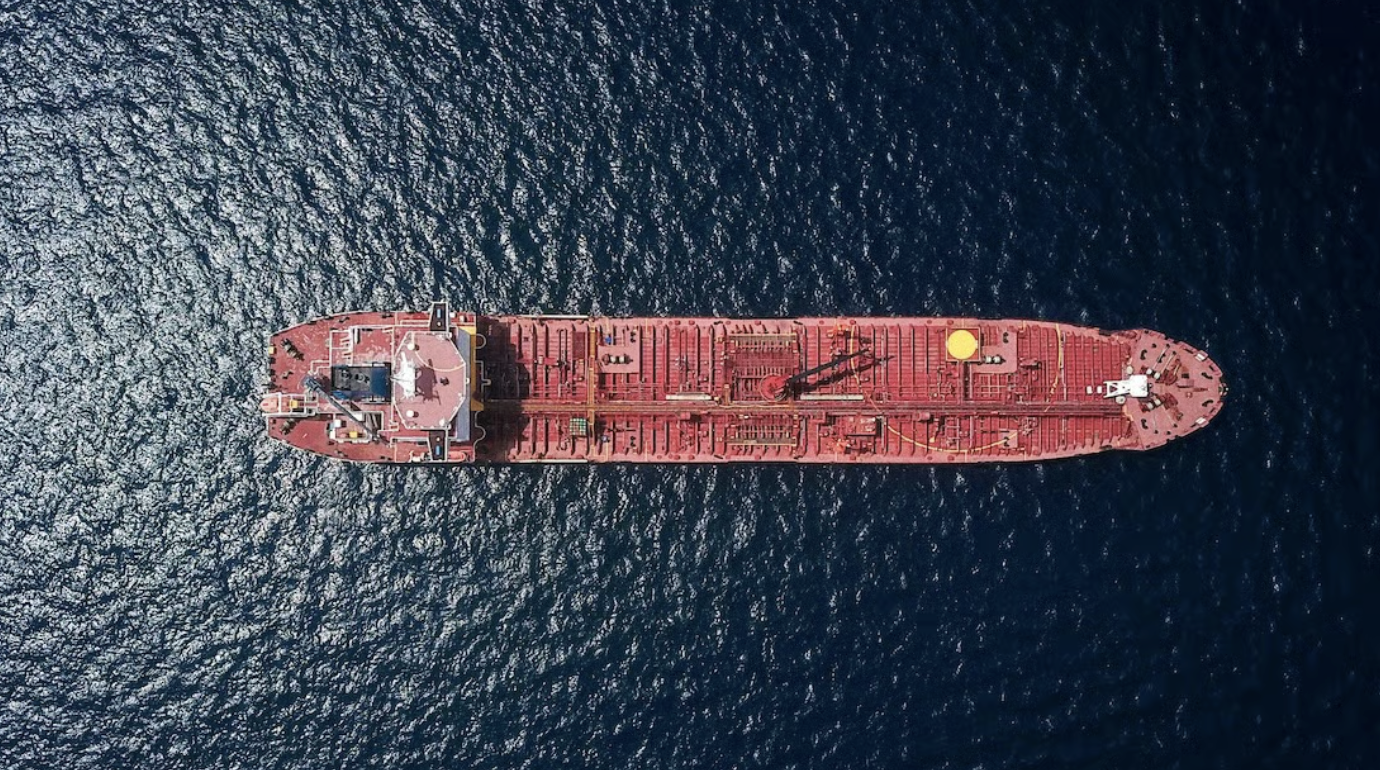
week. ADNOC's LNG tankers. Bloomberg ship-tracking caught them
moving cargoes by turning off AIS transponders. The official story is
"halted." The operational story is "moving, dark." Both are true.
|
|
|
The cargo wants to move.
|
|
Thank you for being with us on this journey, The Brave New Business
Journal.
|
|
Every Tuesday, what you will find here is the same shape. Five stories from
the week that actually matter for your category. After each one, a fillable
post template you can publish the same day, positioning yourself as the
credible thought leader in your field. No theory. No motivational fluff.
The events of the week, decoded into the work you can do before Friday.
|
|
We are Brave New Media. A B2B communications and strategy agency working
with 30+ brands across Europe, the Middle East, and the United States. The
new US branch is in the making. We specialise in real estate development,
supply chain, manufacturing, and heavy industries.
|
|
— Anne
|
|
|
|
|
|
01 · GEOPOLITICAL SHOCK
|
|
Hormuz just hardened from spike into regime.
|
|
Iran created the Persian Gulf Strait Authority between 5 and 8 May to
formally approve and toll every commercial transit. About 2,000 vessels are
stranded across both sides of the strait. The CMA CGM San Antonio took a
cruise missile (5 May, eight crew injured). The ADNOC-owned M.V. Barakah
was hit by two drones (3 May). The HMM Namu exploded off Umm Al Quwain (4
May).
|
|
Why it
matters. "We are resilient" stopped being an answer this week.
Procurement now wants a dated, named, customer-confirmable re-route receipt
before the meeting starts.
|
|
By the numbers
|
|
40 weekly Hormuz transits versus a pre-disruption norm of 840 (95%
reduction)
|
|
2,000 vessels stranded across both sides, 325 of them tankers
|
|
6 May: US administration paused Operation Project Freedom citing "great
progress"
|
|
“The Strait of Hormuz must never be held hostage or used as a
tool of economic coercion and extortion.”
— Sultan Ahmed Al Jaber, UAE Industry Minister and ADNOC Managing
Director
|
|
|
Your post this week — The Decision Log
Audience: peers, your boss, your team, your customers. Function:
operator credibility. Mechanic: after-action review, the "I made
this call under pressure" voice.
Hook
"On [date this week] I [specific operational decision]. Here is
the call I made, what I told the customer, and what I would do
differently next time."
Body
- The trigger (the carrier email,
customer call, ops alert that made the decision necessary)
- The two or three options I had on
the table
- The call I made and why
- The exact line I sent the customer
or my boss
- What I would do earlier next time
Closing line
"What is the most recent operational call you made before anyone
asked you to make it?"
Example opening
"On Wednesday at 14:00, I shifted 3 customers from our Asia-EU
Suez lanes to Cape rotations. The trigger was the 09:00 carrier
surcharge email, not the news cycle. Here are the alternatives I
weighed and the customer email I sent at 14:30."
|
|
|
|
|
|
|
02 · DARK OPERATIONS
|
|
ADNOC's tankers are moving by going dark.
|
|
Per Bloomberg ship-tracking analysis (6-7 May), ADNOC has continued
exporting LNG cargoes through Hormuz by turning off AIS transponders. The
vessels that physically continued moving did so without showing on the
trackers your buyer is watching.
|
|
Why it
matters. Two stories are running at the same time. The
formal-economy story is "transits halted." The operational-economy story is
"LNG is moving anyway, dark." Most LinkedIn posts only see the first. The
vendor who tells the buyer the second one first looks like an analyst, not
a forwarder.
|
|
Zoom in
|
|
This is the operational detail almost no one outside Bloomberg has reached
for. It is also the most useful data point of the week for anyone repricing
long-term contracts off "open" vs "closed" assumptions.
|
|
Your post this week — The Customer Conversation
Script
Audience: peers (account managers, ops managers, sales support).
Function: practical playbook sharing. Mechanic: overdelivery,
give the actual answer scripts.
Hook
"5 questions my customers asked me this week about [event]. Here
are the 5 lines I used to answer them. Steal them."
Body
- 5 numbered customer questions
- 5 numbered answers, each short and
specific (timing, cost, alternative, what we are doing, when we
will know more)
- A note saying which answer
customers reacted to best
Closing line
"Which one of these did you not have a clean answer for on
Monday?"
Example opening
"5 questions my customers asked me this week about Hormuz
shipping status. The headlines say closed. Bloomberg says ADNOC
tankers are moving by going dark. Here are the 5 lines I used at
the desk when both stories are true. Steal them and put them in
your team's talk-track."
|
|
|
|
|
|
|
03 · MARKET SIGNAL
|
|
Kalshi prices structural disruption. The market disagrees with the
headlines.
|
|
By the numbers (8 May)
|
|
44% probability of normal Hormuz traffic before August
|
|
57% probability by 1 September
|
|
86% probability of no unrestricted shipping by 31 May
|
|
>50% probability of WTI hitting $127 this year
|
|
63% probability of WTI crossing $120
|
|
Why it
matters. The news cycle leaned bullish on the diplomatic pause.
Markets, where money is on the line, are pricing it bearish. The gap is the
alpha for any procurement officer who reads both. Most do not. Yet.
|
|
Your post this week — The Boss Update Before They
Ask
Audience: ops managers, supply chain managers, junior managers
reporting up. Function: reporting-up credibility (one of the most
under-shared post formats on LinkedIn). Mechanic: anticipation,
show the prep work.
Hook
"Your boss is going to ask about [event] on Monday. Here is the
5-line update I am sending mine on Sunday night, before they
ask."
Body
- Current status: one line
- What changed this week: one line
(use Kalshi or another hard number)
- What we did about it: one line
- What is at risk: one line
- What we need (decision, budget,
escalation): one line
Closing line
"What is the line your boss is going to ask you on Monday that
you do not yet have a clean answer for?"
Example opening
"Your boss is going to ask about Hormuz exposure on Monday. Here
is the 5-line email I am sending mine on Sunday night, before
they ask. Kalshi prices 86% probability of no unrestricted
shipping by 31 May, so I am leading with the number. Copy it.
Adapt it. Send yours."
|
|
|
|
|
|
|
04 · CONSUMER SIGNAL
|
|
The pump hit $4.558. CPI prints Tuesday morning.
|
|
AAA's national gasoline average closed at $4.558 on 8 May, up 25 cents in
two weeks, the highest level since 2022. April US CPI prints Tuesday at
08:30 ET, the first post-Hormuz inflation read.
|
|
Why it
matters. The pump price is the consumer-facing transmission of the
oil shock. Tuesday's CPI will tell us whether the shock has reached core.
Your customer's CFO will read both numbers in the Q2 review and start
asking why your fuel surcharge model has not moved.
|
|
What we're watching
|
|
Hot CPI (>0.3% MoM) → every CFO in your customer base re-prices Q2
logistics by Wednesday
|
|
Soft CPI → relief rally is real, but the Kalshi curve still says structural
|
|
Either way: the vendor who names the numbers first looks like an analyst
|
|
Your post this week — The Surcharge Pushback
Receipt
Audience: purchasing managers, 3PL owners, sourcing leads.
Function: practical authority. Mechanic: tactical playbook, real
email, real clause, real response.
Hook
"Got a [type] surcharge email mid-contract this week. Here is the
clause that mattered and the response I sent."
Body
- The email I got (one or two
anonymised lines from it)
- The clause in our contract that I
leaned on
- The response I sent the carrier
- What we agreed to
- What that cost us (or saved us)
- What I am putting in the next
contract
Closing line
"What is the surcharge email in your inbox right now that you
have not responded to yet?"
Example opening
"Got a 4.2% peak-season surcharge email from a carrier on
Wednesday. They cited AAA pump prices at $4.558 and Tuesday's CPI
as the trigger. Here is the contract clause I leaned on, the
email I sent back at 16:00, and what we eventually agreed to."
|
|
|
|
|
|
|
05 · AI & SEARCH SHIFT
|
|
An AI agent is reading your service page right now. You are not the
audience.
|
|
project44's AI Freight Procurement Agent, launched March 2026, has booked
publicly reported results in eight weeks: 4.1% freight cost mitigation, 75%
reduction in sourcing cycle time, 70% reduction in manual coordination. The
agent runs on a logistics data graph covering 259,000 carriers and 1.5
billion shipments across 186 countries.
|
|
Why it
matters. Procurement has stopped writing RFPs the old way. An
agent reads your service page and ranks you before any human touches the
file. If your top three pages still open with brand poetry above the fold
and bury the offer at line 200, the agent extracts no answer and ranks you
below the competitor whose page is structured for extraction. The ranking
is sticky.
|
|
Go deeper: the seven questions a procurement agent now asks of your service
page
|
|
Do you cover the lane I need?
|
|
What is your on-time rate on it?
|
|
What is your alternate if primary fails?
|
|
What is your price band, and how is it priced?
|
|
Who is your last-mile partner?
|
|
Who is your reference customer in my sector?
|
|
What is your published response time when a disruption hits?
|
|
Your post this week — The Carrier Comparison
Receipt
Audience: purchasing peers, ops managers, 3PL owners. Function:
vendor-management credibility. Mechanic: comparative data without
naming names, legal-safe.
Hook
"Three carriers, three responses to [event] this week. Here is
how I am reallocating Q3."
Body
- Carrier A: what they did (surcharge
framing, communication style, capacity hold)
- Carrier B: what they did
- Carrier C: what they did
- The pattern that lost me confidence
- The pattern that won me capacity
- One concrete change in next
quarter's allocation
Closing line
"If your carriers responded the same way, what are you doing
about it before next renewal?"
Example opening
"I ran project44's 7-question scorecard against our top 3 Asia-EU
carriers this week. Carrier A answered 2 out of 7. Carrier B went
silent on the disruption question entirely. Carrier C answered 6,
with named lanes and a published response time. Here is the Q3
allocation change I am making on Monday."
|
|
|
|
|
|
|
Other happenings this week
|
|
When
|
Event
|
Why it matters
|
WhenWed 13 May
post-close
|
EventCisco
Q3 FY2026 reports
|
Why it
mattersRead-through to enterprise IT spend and AI-network
buildout.
|
WhenThu 14 May
pre-market
|
EventHome
Depot Q1 reports
|
Why it
mattersLargest single read on US consumer demand resilience
under $4.558 gas.
|
WhenThu 14 May
08:30 ET
|
EventInitial
Jobless Claims
|
Why it
mattersFirst post-Hormuz hiring read.
|
|
|
The 2M alliance axed its Asia-North Europe loop (Loadstar). Capacity is
still oversupplied even with Cape diversions.
|
|
|
|
|
|
Thank you for being here.
|
|
This is what every Tuesday looks like from now on. Five stories that
actually matter, five fillable posts you can publish the same day, no fluff
in between. New updates about our channels and productions will land in the
same inbox as we ship them. The US branch announcement, when the studio is
ready, comes through here first.
|
|
Happy to grow the community together. If anything in here was worth
keeping, send it to a colleague or peer who wants to be remarkable in their
field. The bar for thought leadership in supply chain, logistics, and
retail is low right now. Three good posts in a row puts most operators in
the top decile of their feed.
|
|
Reply to this email with the question you want answered next week. We pick
the best one and answer it in the issue.
|

|
Anne BecheruFounder,
Brave New MediaWe
don't do gurus. We do growth.
|
|
|
|
|
|
|
A note from Anne
|
|
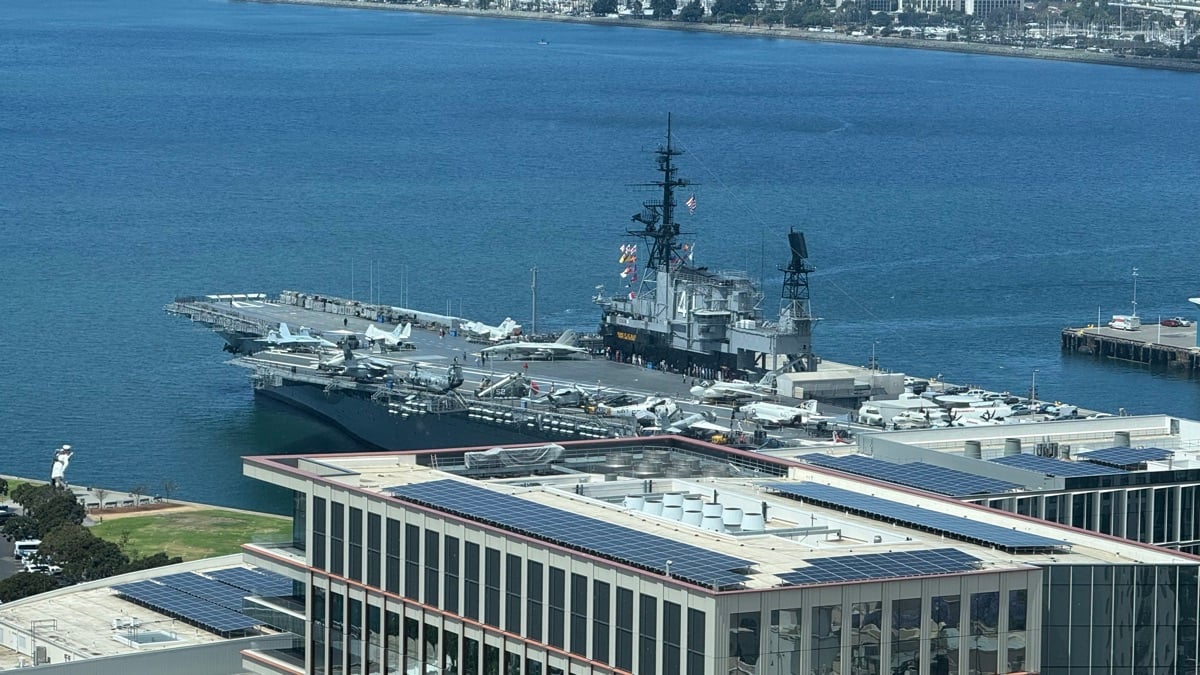
Earlier this month I was in San Diego at a logistics and commercial
leadership conference. We stayed at the Manchester Grand Hyatt, floor 26,
the side facing the airport.
|
|
From that window you see four modes converging inside one square mile.
Planes lifting off SAN every ninety seconds. Trucks queueing on I-5. The
BNSF rail spur disappearing north. The Port of San Diego working the
National City terminal in the distance. It looks like abundance.
|
|
|
Four modes in one square mile.
|
|
It is not abundance. The 351-mile LOSSAN corridor is the only rail
connection between San Diego and the rest of the country. The port itself
is a secondary node, specialised in break-bulk and roll-on/roll-off, not
the container volume that runs the West Coast. Most of what San Diego
receives still has to be drayed up to LA/Long Beach or trucked across the
Tijuana border.
|
|
The view from floor 26 is the entire argument I want to make this week. You
can have every mode in your line of sight and still be running a
single-route operation. That is what your buyers are now stress-testing
for, with the Strait of Hormuz situation into its second week. The
companies that get this right in the next quarter will not be the ones with
the most modes on the homepage. They will be the ones who can prove modal
optionality with a dated example.
|
|
On
this day in 1949 — the Soviet blockade of Berlin was lifted,
ending the longest sustained airlift in history. Over eleven months, Allied
pilots flew 277,000 missions and delivered 2.3 million tons of supplies
into a city that had been told it would starve. The lesson the supply chain
world keeps re-learning: when one route is closed, the next route gets
invented under pressure. ADNOC's transponders are off this week for the
same reason a C-54 carried coal in 1948. The cargo wants to move.
|