|
The Brave New Business Journal
|
|
Issue 10 · Tuesday, 7 July 2026 · Reading time: 6 minutes
|
|
How business worked 250 years ago, and 5 things you can post today
|
|
It’s Tuesday, July 7. Here’s what’s worth knowing this week, so you can walk into
any meeting as the person who actually read the thing everyone else skimmed.
|
|
But first, a story. This weekend the Financial Times asked a group of famous
leaders one question: as America turns 250, which single person should we still
remember 250 years from now? Jamie Dimon, who runs the biggest bank in America,
chose Abraham Lincoln. The line that stuck with me was his. America was never
guaranteed to succeed. Every generation has to protect it and rebuild it.
That’s true for your business too. No shipping lane, no supplier, no profit
margin stays good on its own. You have to work at it, every quarter, or it slowly
falls apart.
So here’s the plan for today. First we look back 250 years, at how people moved
and paid for goods when they had no computers, no tracking, and no data. It’s a
good story, and it makes you smarter about your own job. Then we come back to
right now: a simple graph of this week’s big economic events, five things you can
post on LinkedIn today, and one quick note about where I’ll be on Wednesday.
Let’s go.
|
|
|
|
01 · The Long View
|
|
250 years ago, this is how business was done
|
|
|
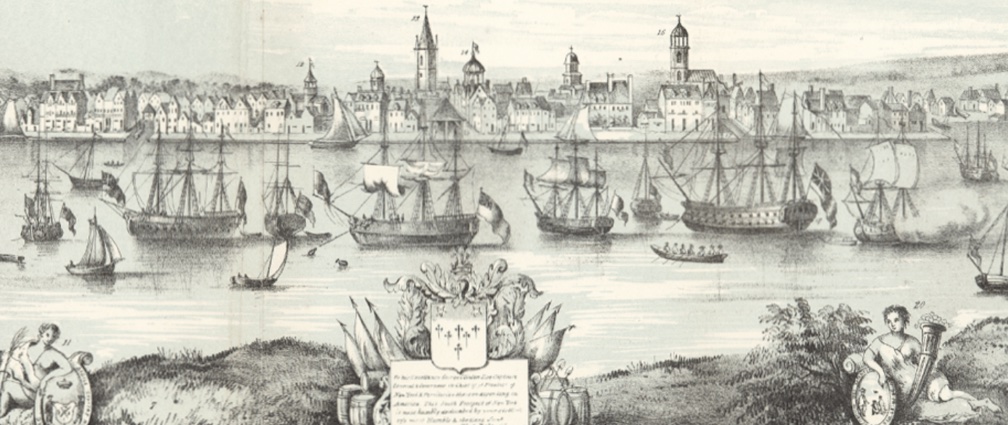
Picture London in the year 1774. America is about to become a country. Near the
river, a group of men who sell insurance for ships decide to organise themselves.
They form a group called the Society of Lloyd’s. (Source: Lloyd’s.)
|
|
Here’s the surprising part. They had no computers, no tracking, no data at all. And
yet they invented the basic tools that still run global trade today. Four of them
are below. Each one is also a simple, smart thing you can say in a meeting this
week.
|
|
1. Information first, money
second. It started in a coffee shop owned by a man named Edward
Lloyd. People went there because Lloyd wrote down all the ship news: which
ships had left, which had arrived, and which had sunk. Because he had the
best information, he could sell insurance. The lesson for today: the person
with the clearest picture of what’s happening sets the price. Everyone else
just pays what they’re told.
|
|
|
|
2. Where the word “underwriter” comes
from. When a merchant had a risky trip, he wrote the details of his
ship and cargo on a piece of paper and passed it around the room. Anyone
willing to share the risk signed their name under it, and wrote down how much
of the risk they would take. That’s the whole story: they signed underneath,
so they were called under-writers. One name, their own money, real
responsibility.
|
|
|
|
3. A loan and insurance in one, called
bottomry. Say a ship captain far from home ran out of money. He
could borrow cash using his ship as the guarantee. If the trip went well, he
paid the loan back with high interest. If the ship sank, he owed nothing, and
the lender lost the money instead. So the loan also protected him like
insurance. They did this because a ship was basically the owner’s entire
fortune.
|
|
|
|
4. The oldest rule at sea, still in your
paperwork today. It’s called “general average,” and it’s about 3,000
years old. The rule is simple: if the crew has to throw some cargo into the
sea to stop the ship from sinking, then everyone whose cargo was saved chips
in to pay for the cargo that was lost. Shared risk, shared bill. It’s still
written into shipping contracts right now.
|
|
|
Here’s the simple point. These people had almost no information and still built the
system we use today. Their real skill wasn’t being certain. It was making a smart
bet on a risk they couldn’t fully see, and being right often enough to stay in
business. That’s still the job.
|
|
|
|
02 · Graph of the Week
|
|
Graph of the week: the big economic events this week
|
|
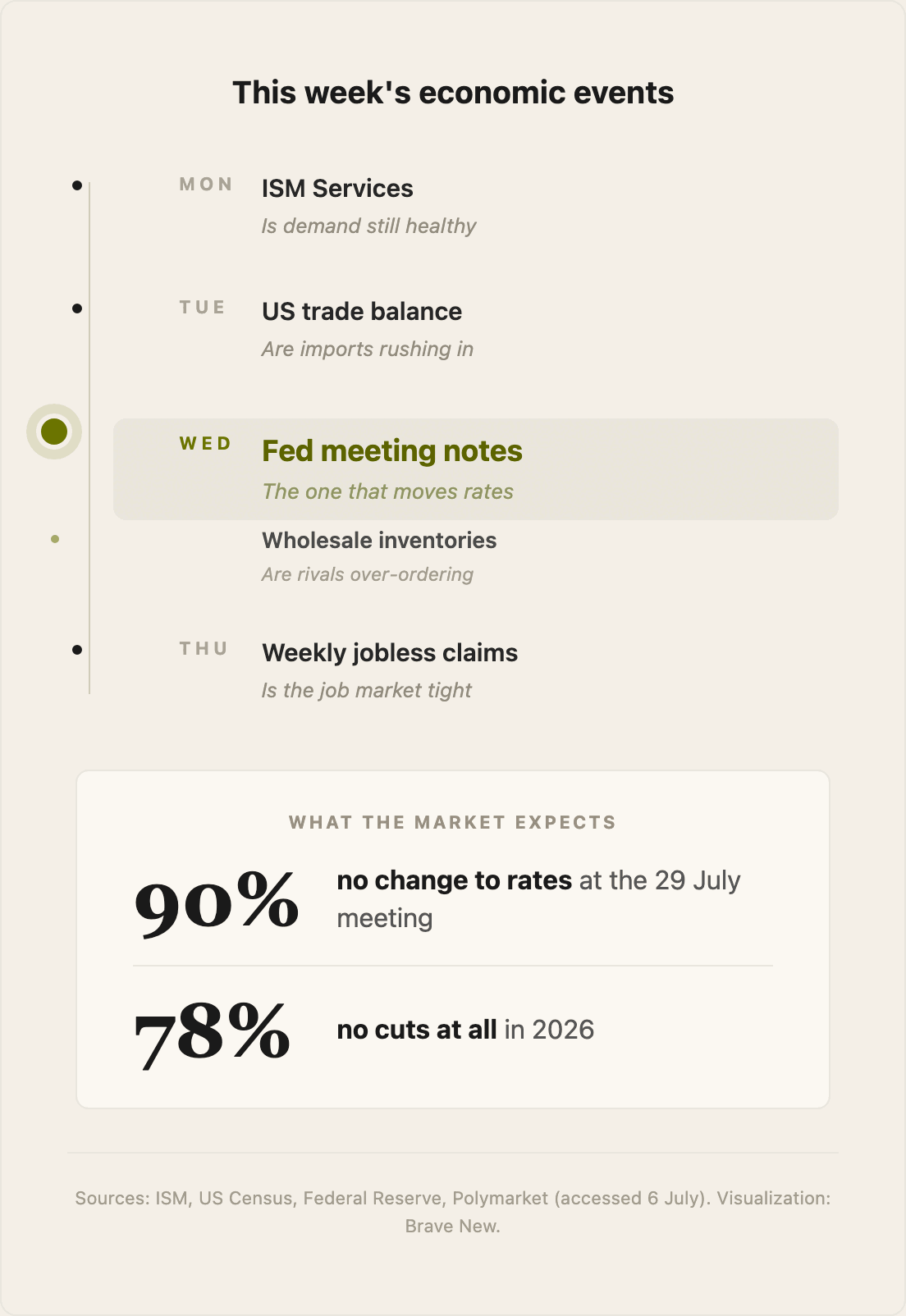
Now, to this week. Here are the main US economic reports coming out. Most weeks,
the market reacts to these. This week, the market expects almost nothing to change.
The one to watch is Wednesday.
|
|
|
The reports will move markets a little. The interest rate will not. So plan your
busy-season stock as if today’s borrowing cost stays with you until the end of the
year, because it probably will.
|
|
What this means for
you. Interest rates are the cost of borrowing money, and they’re not
expected to fall this year. So if you borrow to buy extra stock for the busy
season, that stock stays expensive to finance right through to the end of the year.
Cheap borrowing isn’t coming to rescue you. Only order as much as you’re confident
you can sell.
|
|
|
|
03 · Post This Week
|
|
The news worth posting this week, and how it hits your supply chain
|
|
Here’s the useful part. One section, not three. Each item below is the news, what
it does to your supply chain, and a post you can paste today and put your own name
on. Pick one, add your take, ship it. You’ll sound informed, because you’re using
real numbers, not guesses.
|
|
Shipping prices hit a two-year high.
|
|
The cost to ship one large container jumped 9% in a week, to about 4,530 dollars,
and it’s up 61% from a year ago. (Source: Drewry, week ending 2 July 2026.)
|
|
Your supply chain:
your busy-season ocean freight just got a lot more expensive, and it’s a price grab
by the carriers, not a real shortage.
|
|
Post this:
“Container rates just hit a two-year high. This isn’t scarcity, it’s a
busy-season surcharge the lines are charging because they can. Lock your
rates before the next increase lands.”
|
|
|
The US and EU signed a new tariff deal.
|
|
A tariff is a tax on imported goods. Since 1 July, Europe dropped its tax on US
factory goods, and the US capped its tax on almost all European goods at 15%.
(Source: European Commission.)
|
|
Your supply chain:
your landed-cost maths changed last week. If your models still run on the old tax
rates, your prices are wrong right now.
|
|
Post this:
“The new US-EU tariff deal went live on 1 July. If your cost calculations
still use the old rates, they’re already out of date. Time to re-check every
landed cost.”
|
|
|
US factory prices are finally falling.
|
|
A closely watched measure of what factories pay for materials had its biggest
one-month drop in three years. (Source: ISM, 1 July 2026.)
|
|
Your supply chain:
your suppliers’ own costs are coming down, so the price rises they’re still quoting
you are getting harder to defend.
|
|
Post this:
“Factory input prices just posted their biggest drop in three years. If a
supplier is still quoting you last quarter’s increase, this is the week to
push back.”
|
|
|
Oil is moving freely again through the Strait of Hormuz.
|
|
The Strait of Hormuz is a narrow stretch of sea that a huge share of the world’s
oil passes through. After recent tension, more than 10 million barrels a day are
flowing again, with US navy support. (Source: Bloomberg, 1 July 2026.)
|
|
Your supply chain:
the war-risk charge that crept into shipping and fuel bills last month no longer
matches what’s actually happening at sea.
|
|
Post this:
“Oil is flowing through Hormuz again, over 10 million barrels a day. If your
freight or fuel invoices still carry a danger surcharge from last month, ask
for it to come off.”
|
|
|
US hiring cooled, and interest rates aren’t moving.
|
|
US companies added just 57,000 jobs in June, about half of what was expected, and
the central bank is now expected to leave interest rates alone. (Source: CNBC, 2
July 2026.)
|
|
Your supply chain:
two signals in one. Demand may soften just as peak season starts, and the money you
borrow to build inventory stays expensive all year.
|
|
Post this:
“Hiring slowed to 57,000 in June and rates are staying put. For operators
that means softer demand ahead and costly money to finance stock. Order to
the demand you can actually defend.”
|
|
|
|
|
04 · One More Thing
|
|
One more thing: come find me in Geneva
|
|
Two weeks ago we were at Cannes Lions. This week it’s Geneva, for the AI for Good
Global Summit, which runs from 7 to 10 July. It’s the United Nations’ main event on
artificial intelligence, and it puts the people deciding how AI gets used in the
real world, logistics and factories included, in one place for four days. I’ll be
there listening hard and bringing the useful parts back to you.
|
|
(Details: aiforgood.itu.int/summit26.)
|
|
If you’re going too, let’s meet. Reply to this email, or book a free slot straight
on my calendar with the link just below, and we’ll sort out a time and a coffee.
|
|
|
|
Before you go: book a free audit
|
|
Here’s what Brave New does. Many good companies in shipping, logistics, and
industry do great work but sound exactly like their competitors. Same words, same
claims. So buyers can’t tell them apart, and the AI tools that buyers now use can’t
either. You end up invisible at the exact moment you need to stand out.
|
|
We fix that. We help you sound like yourself, so that people, and AI, actually
notice and remember you.
|
|
The audit is a free 30-minute call with one of our senior people. No sales pitch.
We look at how you show up in public: your profile, your “about” text, and your
recent posts. Then we tell you what your message sounds like right now, what you’re
missing, and the one thing to change this week. If it’s not useful, you’ve lost
half an hour. If it is, you decide what happens next.
|
|
Book your free audit here (and if you’re headed to Geneva, grab a slot and we’ll
meet there):
|
|
|
|
Reach out, because sounding like everyone else has a real cost: people can’t tell
you apart, so they forget you.
|
|
|

|
Anne Becheru
Senior Marketing Strategist, Founder of Brave New Media
|
|
 Brave New Media


