 Brave New Media
|
||||||||||||||||||
| The Brave New Business Journal | ||||||||||||||||||
| Issue 11 · Tuesday, 14 July 2026 · Reading time: 8 minutes | ||||||||||||||||||
| Sharing my opinions isn’t my job. Here’s what that costs you. | ||||||||||||||||||
| It’s Tuesday, 14 July. Staying quiet feels like the safe choice. This week we put a price on it, so you can see what silence is actually costing you. | ||||||||||||||||||
|
If this is your first issue, let me tell you who’s writing to you first. I’m Anne, founder of Brave New. We’re a brand and communications agency. For almost ten years we’ve helped international B2B brands find their voice and get heard by the right people. Recently we started doing something new: helping operators who do great work but stay quiet, or sound like everyone else. The guides you downloaded, this newsletter, and the free audit at the bottom are all part of that. That’s why you’re getting this email. We’re glad you’re here. Every Tuesday we send you one useful read, so you can walk into any meeting as the person who actually read the thing everyone else skimmed. Here’s this week’s. |
||||||||||||||||||
|
||||||||||||||||||
|
I get it. You’re busy, you’re private, and saying what you think in public feels risky. But here’s the catch. Staying quiet is not the safe choice you think it is. It costs you something every week, whether you notice or not. People who share how they think slowly build a reputation that grows on its own. People who don’t are borrowing their reputation from their job title. And that ends the day they change jobs. So today is about you, not your company. Five things you lose by staying quiet. Then three quick lessons for reaching the younger buyers and hires coming up behind you. A quick graph. And a short note from our team in Geneva. |
||||||||||||||||||
| Two things to keep in mind before we start: | ||||||||||||||||||
|
||||||||||||||||||
| Let’s go. | ||||||||||||||||||
|
|
||||||||||||||||||
| 01 · The Cost of Silence | ||||||||||||||||||
| Five things you lose by keeping your opinions to yourself | ||||||||||||||||||
| Read these as costs, not tips. If you stay quiet, you’re already losing them. | ||||||||||||||||||
|
||||||||||||||||||
| And yes, the company wins too. Every trusted human voice is a way to reach people that no ad budget can buy. But the biggest winner here is you. | ||||||||||||||||||
|
|
||||||||||||||||||
| 02 · The Next Generation | ||||||||||||||||||
| Three quick Gen Z lessons | ||||||||||||||||||
| Gen Z are now the most influential group in culture. Here’s how they build trust in people, and what it tells you about building your own reputation. | ||||||||||||||||||
|
||||||||||||||||||
| Try this: post from your own profile, one day a week, every week. A regular slot from a real person beats a polished brochure nobody watches. | ||||||||||||||||||
| (Source: Spotify Culture Next 2026.) | ||||||||||||||||||
|
|
||||||||||||||||||
| 03 · Graph of the Week | ||||||||||||||||||
| The next generation is moving to video, and to voices | ||||||||||||||||||
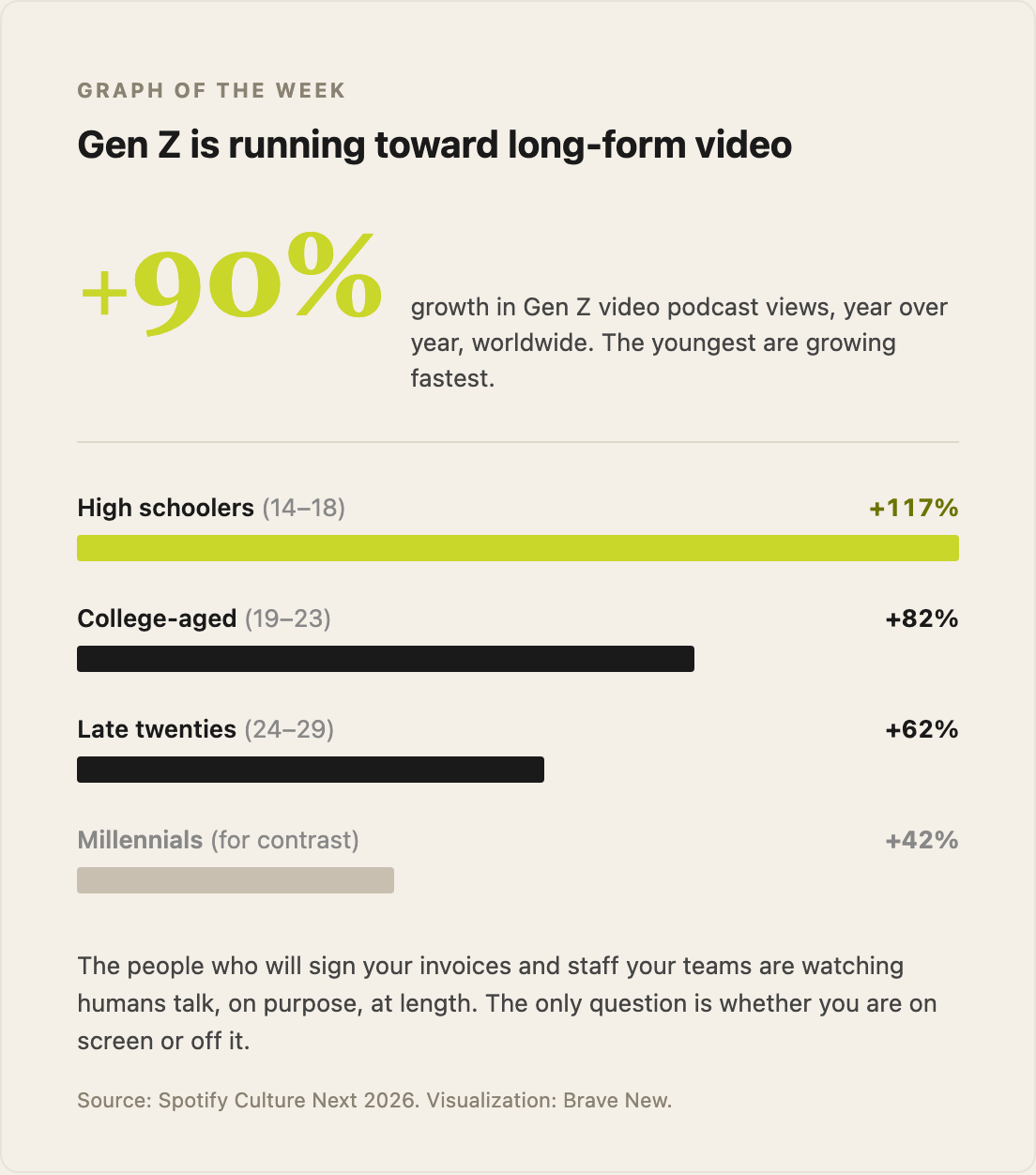
| Look at the shape of it. The younger the group, the faster the shift to watching. This is not a fad moving through one age band, it’s the direction the whole market is walking in, and the youngest are walking fastest. | ||||||||||||||||||
|
||||||||||||||||||
| What this means for you. You don’t need to become an influencer. You need to be easy to find and human in the format your future buyers actually use. | ||||||||||||||||||
|
|
||||||||||||||||||
| 04 · Notes from Geneva | ||||||||||||||||||
| What we brought back from the AI for Good summit | ||||||||||||||||||
|
||||||||||||||||||
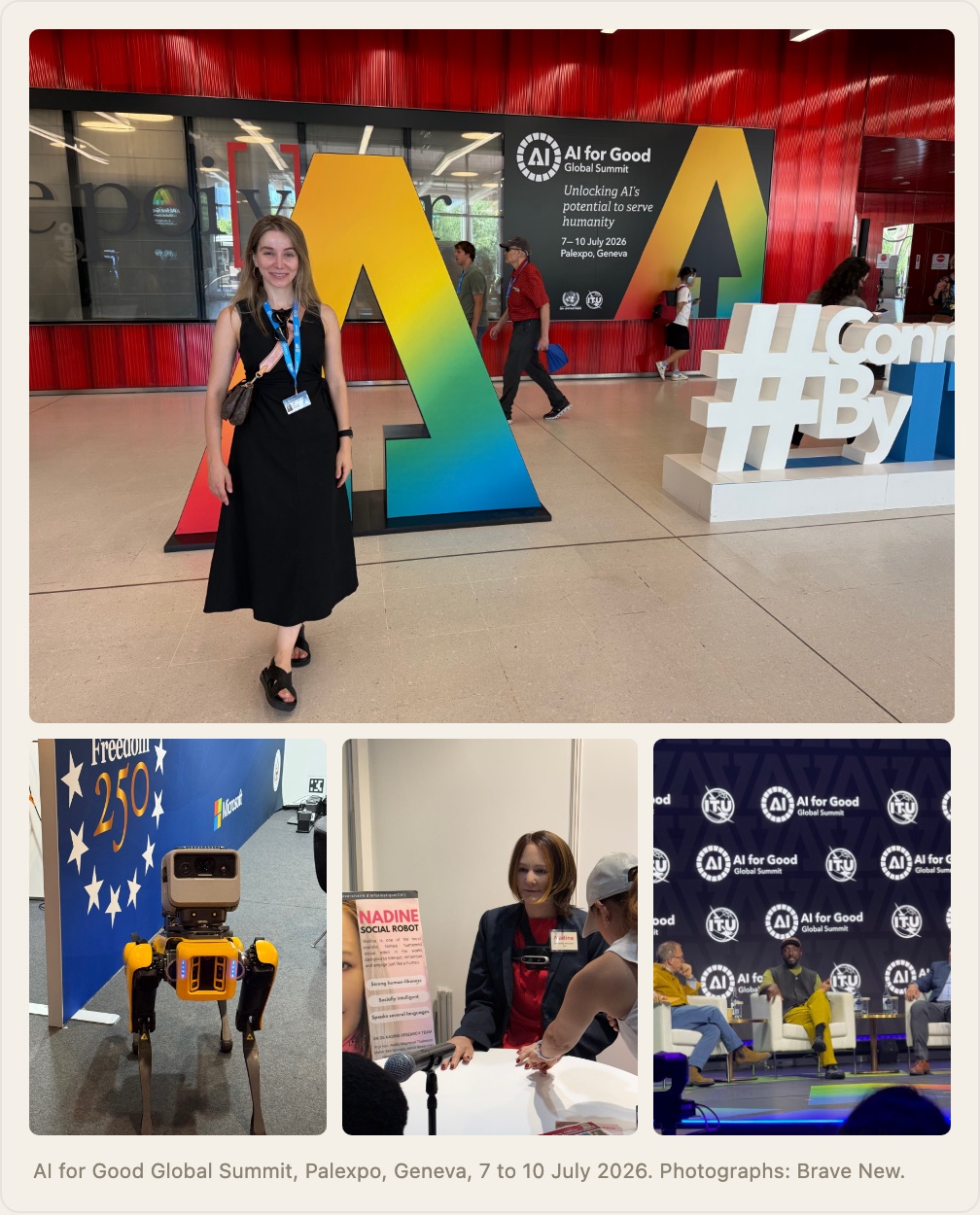
| Last week our team was in Geneva for the AI for Good Global Summit, the United Nations’ big annual conference on how AI is being used in the real world. It landed alongside the new UNCTAD technology report (UNCTAD is the UN’s trade and development body). Three things worth repeating. | ||||||||||||||||||
|
||||||||||||||||||
| (Details: aiforgood.itu.int/summit26.) | ||||||||||||||||||
|
|
||||||||||||||||||
| Before you go | ||||||||||||||||||
| Ask yourself this week: if someone searched your name and your closest competitor’s name today, whose point of view would actually show up? | ||||||||||||||||||
| Try this week: write down one opinion about your industry that not everyone would agree with. Post it, or send it to me. That one sentence does more for your reputation than a month of playing it safe. | ||||||||||||||||||
| Want a hand? | ||||||||||||||||||
| That’s the work we do at Brave New: helping good operators sound like themselves, so people and machines actually notice and remember them. | ||||||||||||||||||
| The audit is a free 30-minute call with one of our senior people. No sales pitch. We look at how you show up in public, your profile, your “about” text, your recent posts, and tell you the one thing to change this week. | ||||||||||||||||||
|
Book your free audit here:
|
||||||||||||||||||
|
|
||||||||||||||||||
|

|
|
||||
|
Follow Along
|
||||
|
You’re receiving this because we’ve crossed paths: a conversation, an intro, an event, a referral. Brave New Media · We track opens and clicks in this email for analytics. See our Privacy Policy for details. © 2026 Brave New Media. All rights reserved. |


