|
The Brave New Business Journal
|
|
Issue 12 · Wednesday, 22 July 2026 · Reading time: 11 minutes
|
|
The easiest way to get your message heard
|
|
It’s Wednesday, and yes, we’re a day late.
|
|
|
|
|
|
01 · The Easiest Way to Get Heard
|
|
Hello,
We skipped Tuesday on purpose. We had a question we wanted to answer properly,
and answering it properly took an extra day of reading and thinking. The question
was simple: what is the easiest way to get your message heard?
Not the cleverest way. Not the most expensive way. The easiest.
So we went looking, and we came back with an answer. Then we did something we’ve
never done in this newsletter: we opened the door and showed you exactly what we
look at when a company asks us for help. The five checks. The actual list. No
mystery, no jargon.
Two reasons for that.
First, because we talk about audits and insights every week, and it’s fair that
you get to see what that actually means before you ever pay anyone anything.
Second, because you might not be the person who decides who your company hires
for marketing. That’s fine. You can still forward this email to your boss, or to
a peer, or to whoever owns communications. Tell them you found a checklist worth
ten minutes. Internal comms, partner comms, client comms, the whole team benefits
when the message gets clear. And so do you, personally, which is the part most
people forget.
|
|
Let’s go.
|
|
The answer is not a bigger budget. It’s fewer words, chosen better, repeated
longer than feels comfortable.
Here are five things that decide whether your message lands, drawn from what we
see every week in tenders, capability decks and category reviews across grocery,
FMCG, retail and logistics.
|
|
1. If someone has to work out what you mean, they don’t
buy. “End-to-end integrated supply chain solutions.” “Category
growth partner.” “Modern logistics for modern retail.” These look like
sentences. They say nothing, and the reader has to do the work of guessing.
Hand your homepage to someone outside your company and ask them to tell you
what you do. If they pause, that pause is costing you tenders.
|
|
|
|
2. Lead with one thing. Hold the rest for the
meeting. Most bids put everything on page one, because everything
feels important. The buyer finishes the page unable to say what you’re best
at.
Open with the single strongest thing. The rest waits until they’re already
interested, which is the meeting, not the document.
|
|
|
|
3. A narrow lane beats a wide one. The cold
chain specialist gets remembered. The provider who also does ambient, and
pallets, and reverse logistics, and a bit of co-packing, gets a polite no.
Turning down work that sits outside your lane feels expensive. Being
unmemorable is more expensive, and the invoice never shows up.
|
|
|
|
4. Words expire, and this is the one that matters most
here. “Sustainable” did real work in 2019 and is now a compliance
checkbox. “Resilient” peaked in 2021. “Visibility,” “end-to-end” and
“AI-powered” are printed on every stand at every trade show you’ll walk
this autumn.
If your differentiator is a word your four closest competitors also use, it
stopped being a differentiator some time ago. The words that built your
reputation are usually the last ones anybody thinks to question.
|
|
|
|
5. Different buyer, different fear, different
conversation. A grocery category buyer is thinking about
availability on shelf and margin. A logistics director is thinking about
cost per pallet and service level. A sustainability lead is thinking about
audit evidence for the next reporting cycle.
Three different fears. One capability deck for all three is a deck that
lands with none of them.
|
|
|
And on patience.
Changing what the market calls you takes years, not quarters, and only if you push
it every single week. Start now, and don’t panic in month four when nothing has
visibly moved.
|
|
|
|
02 · What We Actually Check
|
|
What we actually check when you ask us for help
|
|
Now the open door.
When a company comes to us, we don’t start with ideas. We start with a look. Five
checks, in this order. Here they are, so you can run some of them yourself this
week without us.
|
|
1. Creative intelligence. Your field, your competitors,
and how you actually make money.
Before we write a word, we work out three things.
What is really happening in your field right now, not last year. Who your
competitors are and what they sound like, which we do by reading their
sites and posts side by side with yours. And how your business actually
makes money, meaning which product or service or client type carries the
profit.
That last one matters more than people expect. Companies routinely spend
most of their communication effort on the part of the business that earns
the least. The high-volume, low-margin contract gets the case study. The
specialist service carrying the margin gets one line on a services page. It
is very common and very easy to fix once you see it written down.
By the end of this check we can usually tell you something uncomfortable
and useful: whether you sound different from your competitors, or whether
the four of you are saying the same sentence in slightly different fonts.
|
|
|
|
2. The damage check. What in your communication is
costing you right now.
This is the honest one.
We go through what you already have out in the world. Website, sales decks,
proposals, brochures, LinkedIn, the auto-reply on your info@ address. We
look for things that are actively working against you.
Contradictions, where two pages describe the company differently. Claims
nobody would believe. Sentences that require effort to decode. Pages that
promise a thing you stopped selling. Old logos. Dead links. Names of people
who left in 2023.
None of this is dramatic on its own. Together it tells a buyer something
you never meant to say, which is that nobody is looking after the details.
|
|
|
|
3. The voice check. Do you have one, and is it
yours.
Then we listen.
A brand voice is just the answer to “does this sound like a real, specific
company, or could any competitor put their logo on it?” We take five or six
pieces of your writing and read them next to each other. Usually one of
three things is true.
You have no voice, so everything sounds like it was written by a committee
to avoid offending anyone. Or you have several voices, because five people
write in five styles and no one ever agreed on a house style. Or you have a
good voice that only exists in one place, usually the founder’s own posts,
and it has never made it onto the website.
The third case is the happiest one, because the raw material already exists
inside the building. We just have to move it.
|
|
|
|
4. The company page. Usually your LinkedIn.
We look at your company page the way a buyer does, in about eight seconds.
Does the top line say what you do in plain words? Is the description
written for a customer or for an investor? Has anything been posted this
month? Do the posts get replies, or only silence and the occasional like
from your own head of sales?
Company pages are the most neglected asset in B2B. They are also,
increasingly, where an AI tool goes to work out what your company is. If
your page is thin, the machine has nothing to say about you either.
|
|
|
|
5. The people. Your employees’ LinkedIn profiles, and
whether they engage.
This is the one that tells us the most, and the one nobody expects.
We look at your team’s individual profiles. Are they filled in? Do they
describe the company the same way? Does anyone post? And when the company
page posts something, does anybody from the inside engage with it?
If your employees never engage with their own company, that is a crack in
the wall. And a crack in the wall usually means something structural behind
it.
Sometimes it is small. Nobody ever asked them, or nobody told them it was
allowed. That is a half-day fix.
Sometimes it isn’t small. People don’t share the company’s message because
they don’t believe it, or they don’t feel proud, or they don’t feel safe
putting their name next to it. That isn’t a marketing problem. That’s an
internal culture problem wearing a marketing costume, and no amount of
clever copy will cover it.
We would rather tell you that in week one than sell you a campaign that was
never going to work.
|
|
|
|
|
|
|
03 · The Long View
|
|
And if you want to see check five done well
|
|
While you’re at it, come and see what we make.
We have a channel where we pull apart how companies talk, and there’s one story
on it that belongs in this issue. It’s about Blackstone, a firm managing over a
trillion dollars, and what they do on LinkedIn.
|
|
|
The trumpet makes no sound until someone lifts it and speaks through it, the
message works the same way.
|
|
The short version. Stephen Schwarzman is 78, runs the firm, and appears in a
holiday video wearing a tinsel jacket. Jon Gray, the president, films himself
running in a different city each time and delivers a market read while sweating
through it. Nobody can copy that format, because nobody else is him. They make
jokes about their own confusing internal acronyms. They teach the market
something instead of only announcing wins.
That is check five passing with full marks. The people are the brand. Not the
logo, the people.
And it costs nothing but the decision to allow it. Which is usually the real
blocker, not the budget.
|
|
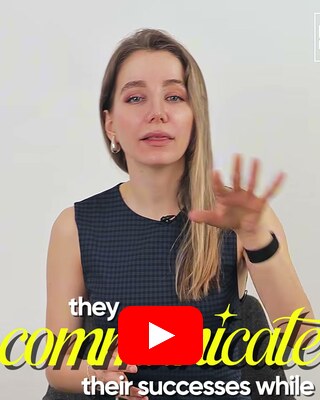
Brave New on YouTube
How a trillion-dollar fund became the coolest brand on LinkedIn
Watch, under three minutes
|
|
|
If you like it, have a look around the rest of the channel. More of these are
coming, and they’re free, same as everything else we send you.
|
|
|
|
Before you go
|
|
Two things to think
about:
|
|
· People don’t buy what they have
to decode. If someone has to think about what you do, you have already lost
the sale, and you’ll never know it happened.
|
|
· Your words have an expiry date.
The sentence that built your business is often the one quietly holding it
back.
|
|
|
Two things to ask
yourself:
|
|
· If a stranger read your homepage
and your closest competitor’s homepage, could they tell you apart? Really?
|
|
· When your company posts
something, does anyone who works there care enough to say so in public?
|
|
|
One thing to try this
week:
|
|
· Open your company’s LinkedIn page
and three of your colleagues’ profiles, side by side. Just look. You will
learn more about your company’s real communication health in ten minutes than
in a quarter of reports.
|
|
|
|
|
Now, the ask, and it isn’t for you
|
|
Here is our favourite thing about this issue: you don’t have to buy anything.
You may not be the person who chooses your company’s marketing partner. Most of
our readers aren’t. So the useful thing you can do is simply forward this email.
Send it to your boss. Send it to the person who owns communications. Send it to a
peer in another company who you know is stuck sounding like everyone else. Say:
here’s a five-point checklist, worth a look.
That’s it. Whoever owns the decision now has a concrete idea to react to, and it
came from you, which is not a bad thing to be known for either.
Because two things get heard when this works. Your company’s story, which is what
the business needs. And your own, as a professional, which is the part that stays
with you when you change jobs. Both of you win. That’s why we keep saying it.
|
|
And if you are the person who decides, or you’d just like the five checks run
properly on your own company, we do it free. Thirty minutes, one of our senior
people, no pitch. We look at how you show up in public and tell you what your
message sounds like right now, what’s missing, and the one thing to change this
week.
|
|
Book your free audit here:
|
|
|
|
Thanks for letting us take the extra day. Normal service, and normal Tuesday,
resumes next week.
|
|
|
|
Anne Becheru
Senior Marketing Strategist, Founder of Brave New Media
|
|
|