|
Forwarded this? Subscribe here and get it every Tuesday. |
|||||||||||||||||||||

The Brave New Business Journal
Issue 17 · Tuesday 25 August 2026 · from Anne Becheru
|
|||||||||||||||||||||
|
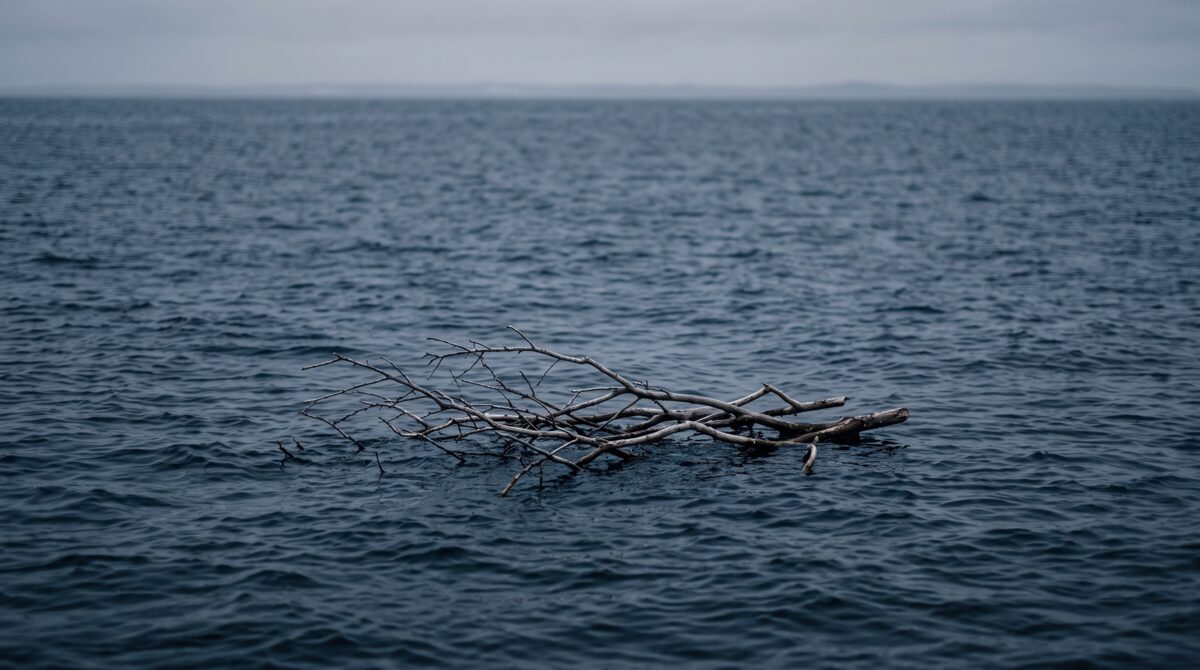
Hello, A French frigate called the Belle Poule was searching for a ship lost in a storm. In broad daylight the lookout signalled a wreck. Every person on board, officers and sailors, saw a raft covered with men waving for help. The admiral lowered a rescue boat. Getting closer, the men in it saw arms stretching out and heard voices. They arrived to find a few tree branches floating in the water.
Nobody lied. A crew already looking for survivors got one suggestion from one person, and several hundred trained sailors then saw, in detail, something that was not there. I spent ten years in journalism and media, and the years since working with companies and investors across Europe, the Gulf and North America. What I learned was not how to find information faster. It was which questions to ask in the first hour, before the thing has finished working on me. Most of those questions are not about whether the story is true. They are about who wanted it published. |
|||||||||||||||||||||
|
Featured
This is a board-level problem, not a fringe one
Pew Research Center asked adults in 25 countries whether false information online is a major threat to their country. A median of 72 per cent said yes, and majorities said so in 24 of the 25. In the World Economic Forum’s Global Risks Report 2026, misinformation and disinformation ranked second among short-term global risks, behind only geoeconomic confrontation. |
|||||||||||||||||||||
|
Graph 1 · What people already think
A median of 72% call false information online a major threat
Source: Pew Research Center, International Opinion on Global Threats, 19 August 2025. Median of 25 countries surveyed. |
|||||||||||||||||||||
|
Why it outruns you
False travels faster than true. MIT researchers studied about 126,000 stories shared on Twitter over eleven years, classified by six independent fact-checking organisations that agreed with each other 95 to 98 per cent of the time. False stories were 70 per cent more likely to be shared onward, and true stories took roughly six times as long to reach 1,500 people. That is not a story about stupid people. It is about which things feel worth passing on. Repetition feels like evidence.
What is new since Le Bon is that repetition can be manufactured. The feeling that everyone is saying something is now a thing you can buy.
And nobody is coming to correct it
X’s Community Notes is the most visible correction system in the world. A four-year study of X’s full public notes dataset, covering 2021 to 2025, found that only 8.3 per cent were ever rated helpful and shown. 87.7 per cent stayed in “needs more ratings” and never appeared at all. The ones that do appear take an average of 26 hours. Almost all the sharing has happened by then. Twenty-six hours later is not a correction, it is an epitaph. Meta went the same way. It announced the end of its third-party fact-checking programme on 7 January 2025, and from 7 April 2025 stopped applying fact-check labels in the United States. In the hour that matters, you are the fact-check. |
|||||||||||||||||||||
|
Graph 2 · The correction almost never arrives
What happens to a Community Note on X
And the ones that do appear take an average of 26 hours. Almost all the sharing has already happened by then. Source: From Birdwatch to Community Notes, a four-year analysis of X's public Community Notes dataset, January 2021 to January 2025 (arXiv:2510.09585). The not-helpful share is the remainder, 100 minus 8.3 minus 87.7. |
|||||||||||||||||||||
|
The ten questions
Three about you, before you look at the story
Three about the claim
Four about who is behind it
This is the part most people skip, and it is the part that matters.
|
|||||||||||||||||||||
|
If this was useful, pass it on
There is nothing to buy in this email. One favour instead. Send it to a colleague, to your boss, or to the person in your company who forwards things fastest. That last one with affection. If someone forwarded this to you, subscribe here. One email, Tuesday mornings.
Who we are, since you might be wondering
Brave New Media is a boutique B2B media and marketing agency. Small team, we work globally. We have only just started talking about ourselves in public, so it is fair if you are surprised to be getting email from a company with almost no footprint. We spent years doing the work and close to no time telling anyone about it. That was a choice, and on reflection it was the wrong one. It is changing quickly now, and on purpose. Glad you are here for it. If you want to reply, it comes straight to me and I read every one. See you next Tuesday.
|
|||||||||||||||||||||
|
Visit brave-new.com to see who we are, how we work, and what we refuse to do.
You are receiving this because you subscribed to The Brave New Business
Journal. |