|
Forwarded this? Subscribe here and get it every Tuesday. | ||||||

The Brave New Business Journal
Issue 26 · Tuesday 27 October 2026 · from Anne Becheru
Test it before you bet on it
| ||||||
|
Tuesday mornings. One idea, one question, one thing to try. | ||||||
|
From Anne
Most bad decisions don't start out looking like bad decisions. They look like confidence. Someone senior says “I know how this works,” the room nods, and nobody asks how they know. This week is about that question. 
| ||||||
|
The store that skipped the test
In 2011, the man who helped build the Apple Store became CEO of JCPenney, a big American department store chain. He had a bold plan: no more coupons, no more sales, new prices, new stores. His own team asked to try it in a few stores first. According to people there, his answer was: “We're not going to test it. We're going to roll it out.” In 2012, sales fell by about a quarter. He was let go in April 2013, after about 17 months. He wasn't stupid. He'd been right before, at Apple, and that was the trap. Being right in one place felt like proof he'd be right in the next one. It was a guess about a different company. | ||||||
|
A guess is not a fact The physicist Richard Feynman explained science in one sentence in 1964. You make a guess, you test it, and “if it disagrees with experiment, it's wrong.” It doesn't matter how clever the guess is, or how important the person who made it. Business needs the same rule. In a meeting, the evidence outranks the job title. That's hard, because in most companies being in charge gets mixed up with being right. So people stop asking for proof from whoever is most senior. | ||||||
|
Three questions before a big decision
| ||||||
|
The three hardest words
Leaders worry that saying it makes them look weak. It does the opposite. It's the sentence that gets a test started. “I don't know, so let's find out” beats “I'm sure” almost every time. | ||||||
|
Try it on yourself: your LinkedIn as a four-week test Here is the same thinking used on something small: how you show up on LinkedIn. Most LinkedIn growth advice is written for people who post every day. Most executives don't have time for that, and don't need it. Fix the profile before you post anything. People look you up before a meeting. That's where they land. Three numbers matter: a 400 x 400 pixel photo, a 1584 x 396 pixel banner, and a headline of up to 220 characters. Use the headline to say who you help and with what, not just your job title. 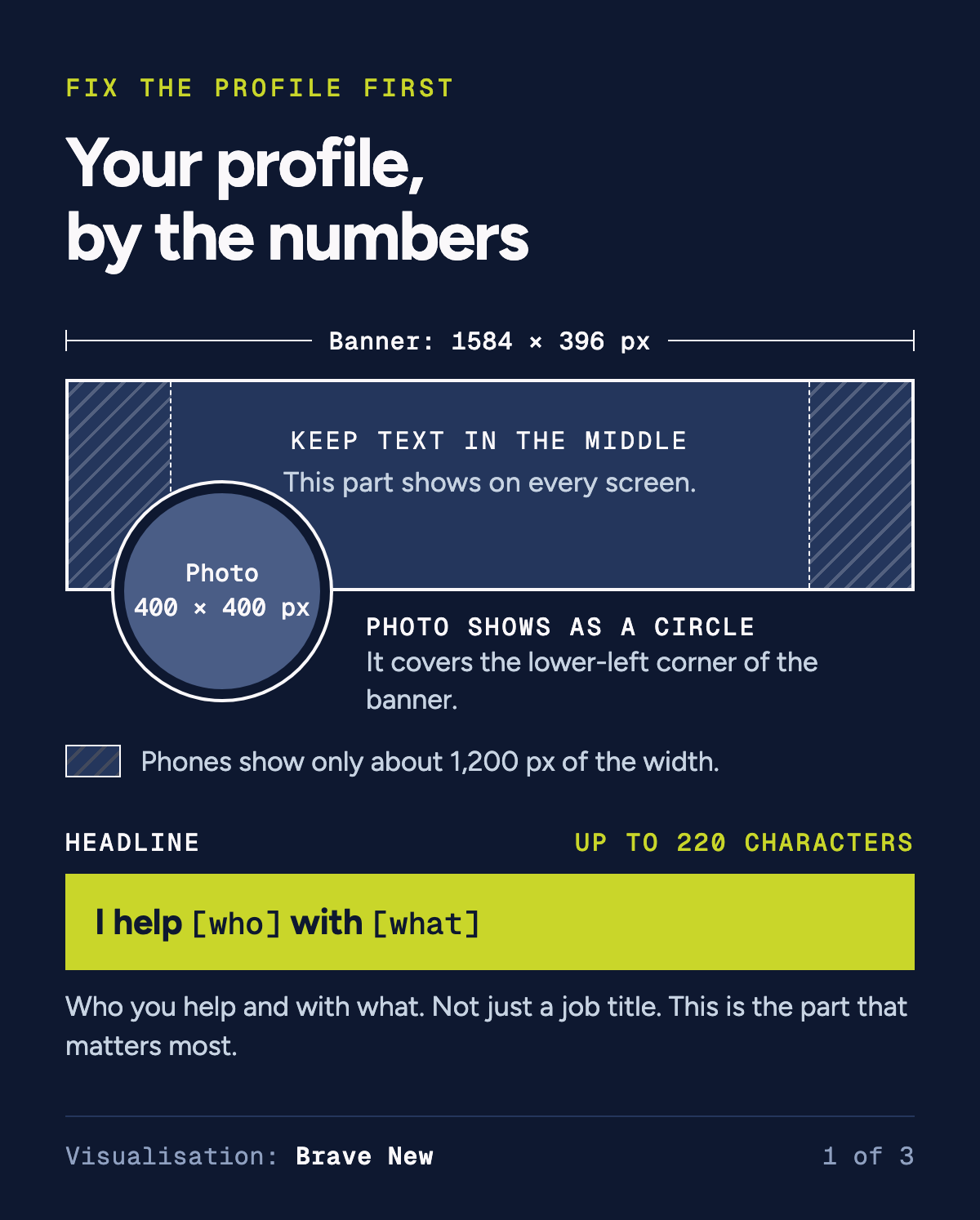
Post once or twice a week, not every day. One post with something only you know beats seven posts anyone could have written. Write from your own decisions: what you tried, what you learned, a customer result (with their permission), your read on news in your industry. Comment before you post. Each week, leave real comments on posts from ten people your customers already listen to. Write them yourself. People can tell when a machine wrote one. 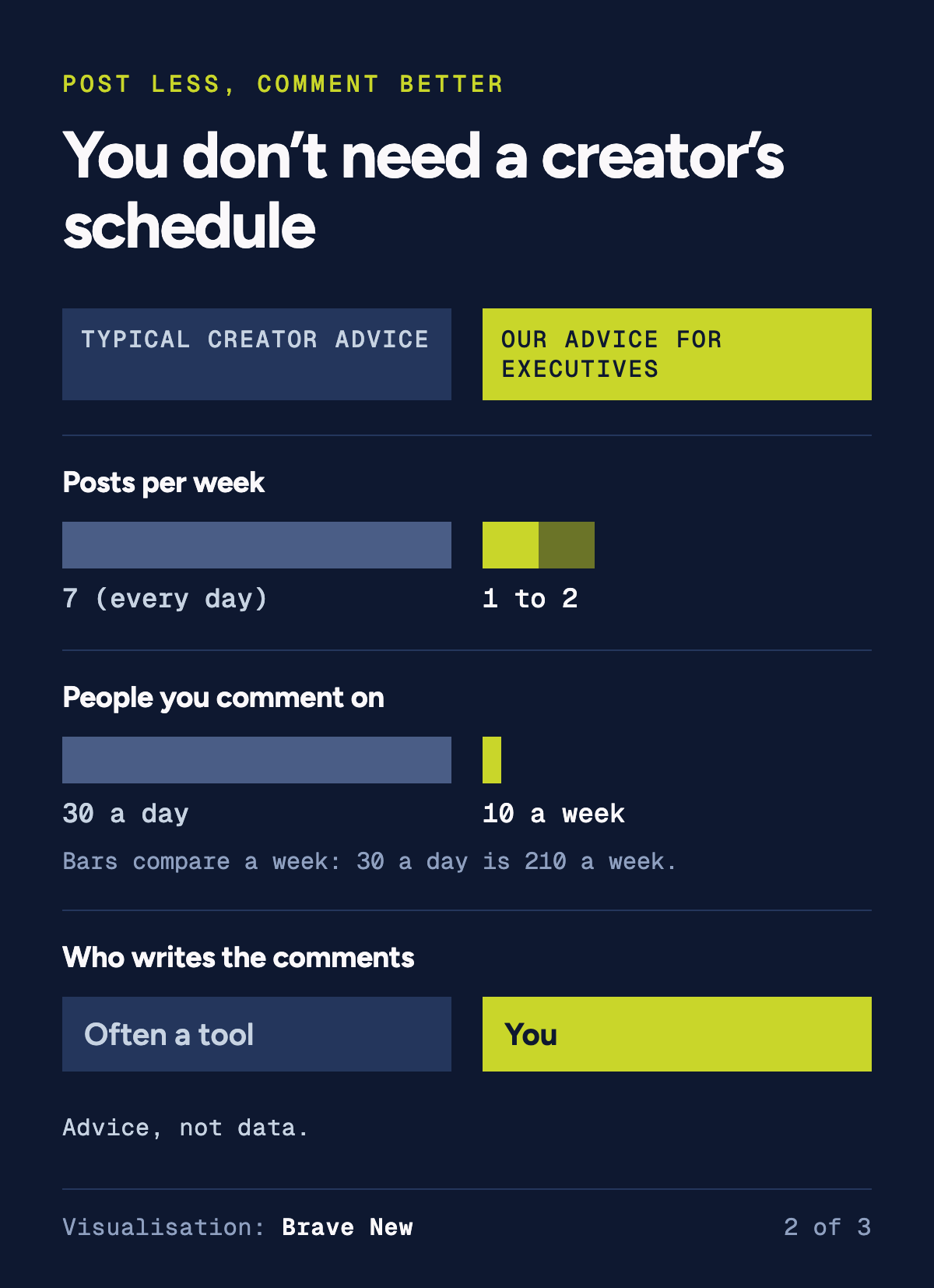
Then run it like a test, not a rollout. Before you start, write down your guess, what would prove it wrong, and when you'll stop. Pick one type of post. Run it for four weeks. That's four to eight posts. Then count the replies. Keep what worked. Drop what didn't. Don't argue with the numbers. 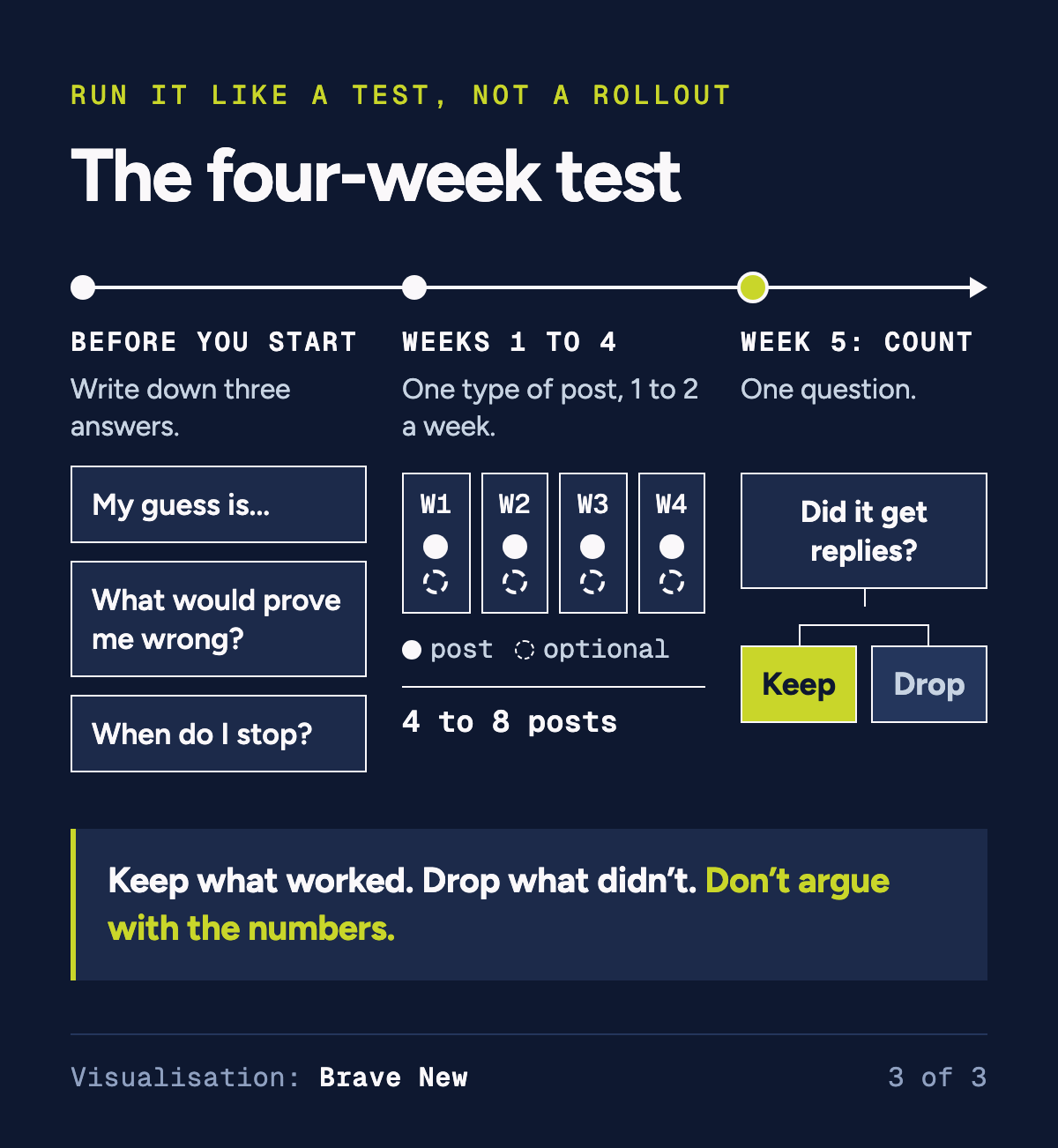
| ||||||
|
Thank you for reading. Hit reply and tell me one thing your team assumed this year that nobody ever tested. I read every answer.
| ||||||
|
About Brave New
Strategy-led growth for high-stakes B2B. Position, build, go broad, prove. The point is to become the name your market searches for. | ||||||
|
We launched Brave New Hive (new!)
The Hive is our marketing pedia for brands in the age of AI. Principles, the history of advertising, branding, the neuroscience underneath it, and our own research. Every entry is written from the original studies, with sources and dates. | ||||||
|
Visit brave-new.com to see who we are, how we work, and what we refuse to do.
You are receiving this because you subscribed to The Brave New Business Journal. |