In January 2009, Tropicana changed nothing about its orange juice and lost roughly 30 million dollars in two months.
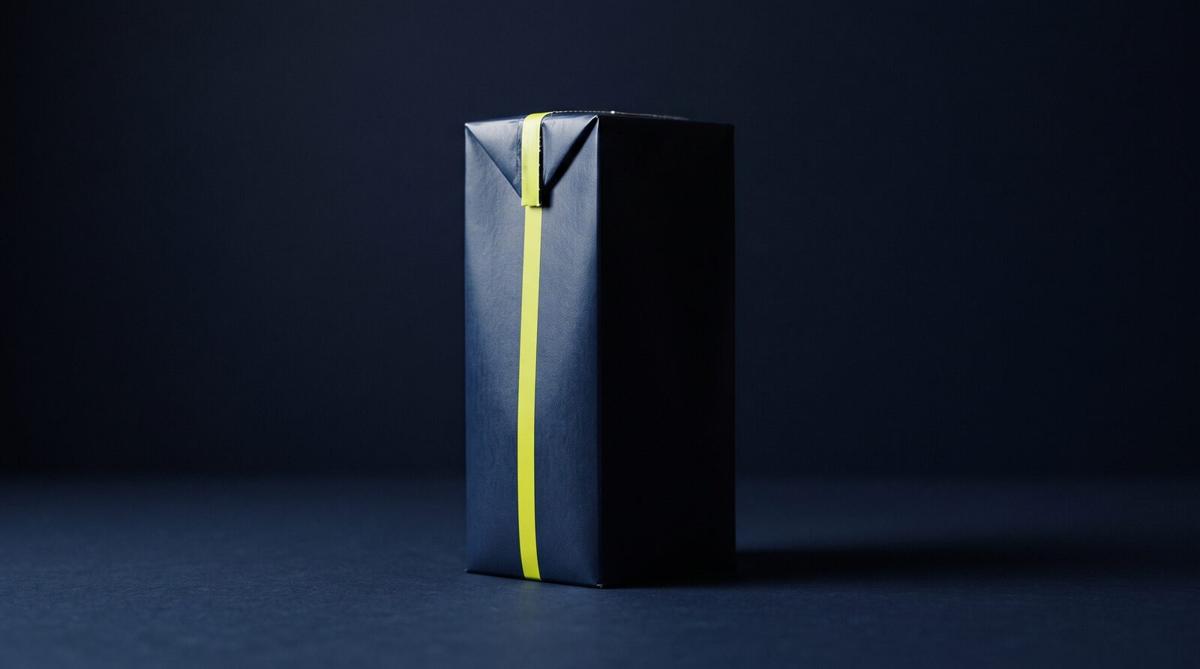
The juice was identical. The price was identical. The only change was the carton: a celebrated agency had replaced the orange with the straw in it with a clean, modern glass of juice. Within weeks, unit sales of the best-selling Pure Premium line fell about 20 percent, while competitors grew, and by late February the company surrendered and put the old carton back (Ad Age, citing Nielsen).
Ask a shopper to explain that and they will give you reasons. The truth is simpler and stranger: the old carton was a signal the brain read in a fraction of a second, and the new one read as a cheaper store brand. Nobody re-evaluated the juice. Their hands just reached past it.
This is the research most B2B leadership teams have never been shown: the buying decision is made by a part of the brain your feature list never reaches.
The short version. Choice is largely non-conscious, emotional, and memory-driven. What customers tell you in research is a confident story invented after the fact. So marketing built on features and rational benefits argues with the part of the brain that is not making the decision. Build for feeling and memory instead.
The half that was always wasted

Start with the oldest joke in the industry, John Wanamaker’s line that half the money spent on advertising is wasted, “and you never know which half.” Thom Noble, who spent a first career in marketing at companies like Diageo and Disney before moving into consumer neuroscience, argues we now know roughly which half it is: the half aimed at what people say, rather than what their brains do.
His account of the problem is blunt. “People are unaware of what really drives them. What people say is usually pretty uninformed about what’s actually going on at the non-conscious level.” Focus groups add social theatre on top: people answer to please, follow the loudest voice in the room, or perform rationality. Depth interviews are worse in one specific way, because a person will talk fluently for an hour about why they buy what they buy, and the whole account can be manufactured after the fact. Noble’s summary is the quote to keep: “We’re really good at making stuff up.”
This is not an insult to buyers. It is how the machinery works. Daniel Kahneman’s famous division describes a fast, automatic, emotional System 1 that makes the call, and a slow, deliberate System 2 that writes the press release afterwards. Rory Sutherland, Ogilvy’s vice chairman, adds the evolutionary logic: the brain runs on shortcuts, habit and social copying, because “the vital thing about a decision is not whether it’s okay or very good, it’s the difference between okay and awful.” We decide first. We explain later. And market research mostly harvests the explanations.
What actually moves a decision
When the neuroscience industry started measuring brains instead of asking them, three levers kept surfacing: attention, emotional engagement, and memory. Noble is categorical about the middle one: “If you don’t get emotional engagement, nothing is likely to shift in terms of perception.”
There is a finding in this literature that should reframe how every brand thinks about advertising. When people buy a familiar brand, far less of the brain lights up than when they consider an unfamiliar one. Sutherland’s reading: the real purpose of much advertising “might be just normalisation,” making your brand the easy, automatic, System 1 default so that choosing you requires no thought at all. That is what marketers call mental availability, and it is built out of feeling and memory, not out of specification tables.
Which is why the strongest line in David Aaker’s fifty years of branding scholarship is also the least flattering: “Customers don’t care about your products. They just don’t care very much.” They care about their own lives, their own risks, their own standing. Aaker’s evidence on what actually penetrates is stories: embed a message in a narrative and it is not 20 percent more effective than a list of claims, it is on the order of 200 percent more effective, because a story is attended to, felt, and remembered, the three levers, all at once. Blair Enns compresses the whole argument into six words: “Value is a feeling, not a fact.”
“But my buyers are engineers”
Every B2B room raises the same objection: our buyers are technical, rational, procurement-driven. The evidence says otherwise. McKinsey’s work on B2B brands found strong brands outperform weak ones by 20 percent, with the strongest carrying a marked emotional component, and their explanation of the myth is almost gentle: the rational-buyer story survives because it flatters everyone involved.
Think about what a B2B purchase actually is: a person, inside a company, making a choice they may have to defend for years, with their reputation attached. That is not a low-emotion decision. It is one of the most emotionally loaded purchases a human being makes, which is exactly why “nobody ever got fired for buying IBM” was the most effective B2B slogan ever written. It contains no feature. It removes a fear.
Sutherland’s practical rule follows: “We spend too much time as marketers trying to ladle on extra positives rather than looking for negatives to remove.” The spec sheet adds positives for System 2 to file away. The brand removes fears for System 1 to feel. Only one of those closes.
What this means for how you talk
Three working rules fall out of the research.
Lead with the feeling, prove with the fact. The feature list still matters, but it is the evidence, not the argument. The argument is emotional: safety, status, relief, belonging. Make the claim a feeling and let the specification defend it.
Build memory, not just messages. Distinctive assets, a consistent voice, a story told the same way for years. The buyer who “just thought of you” when the budget appeared is not a coincidence. They are the return on years of deposits into non-conscious memory.
Distrust what buyers say, watch what they do. Surveys report the explanation, not the decision. Behaviour, retention, repeat purchase, and unprompted search are the honest signals, the same lesson our whole series keeps finding: the easily collected number is rarely the meaningful one.
Tropicana’s customers, remember, could not have told you the carton mattered. Then it changed, and 30 million dollars of behaviour told the truth.
Brave New, plainly
Brave New is the strategy-led growth partner for high-stakes B2B. We build brands that get found, remembered, believed and valued.
What we believe: strategy is the moat and story is the weapon. AI made sameness free, which makes distinctiveness the most expensive asset in your category and the only one that compounds. So the machine does the volume and the versions, never the thinking. As Google and BCG put it in 2026, AI is an engine for growth, not a replacement for talent. The strategy holds the reins.
And what we refuse to do. We don’t do boring. We don’t do vanilla. We don’t do borrowed voices, templated copy, safe work that reads like the category, or dashboards that flatter while the brand quietly fades. Dull is a tax. Our clients don’t pay it.
Insight, with no mercy for the dull. If your brand sounds like everyone else, that is the problem we exist to fix.
Do B2B buyers really decide emotionally? Yes. Purchases are made by individuals carrying personal risk, and McKinsey found strong B2B brands outperform weak ones by 20 percent, with emotion a marked component. The rational-buyer image describes how decisions are justified, not how they are made.
Why is customer research often misleading? Because people cannot access the non-conscious drivers of their own choices, so they construct plausible reasons after deciding. Stated intentions and focus-group opinions routinely diverge from real buying behaviour.
What should a brand optimise for instead of features? Attention, emotional engagement, and memory. Lead with the feeling and use features as proof, build distinctive brand assets that accumulate in memory, and judge success by behaviour rather than by what buyers say.
This piece pairs with “The 8% Trap” and “The Long Game Is a Pricing Strategy.”
Sources: Thom Noble on consumer neuroscience (Cloud Army, 2023); Rory Sutherland (Cloud Army, 2023; Alchemy); Daniel Kahneman’s System 1/System 2; David Aaker on stories and customer indifference; Blair Enns on value as a feeling; McKinsey on B2B brand strength; the Tropicana 2009 case via Ad Age/Nielsen as widely documented; Google/BCG, “The New Era of Marketing Partnerships” (2026).